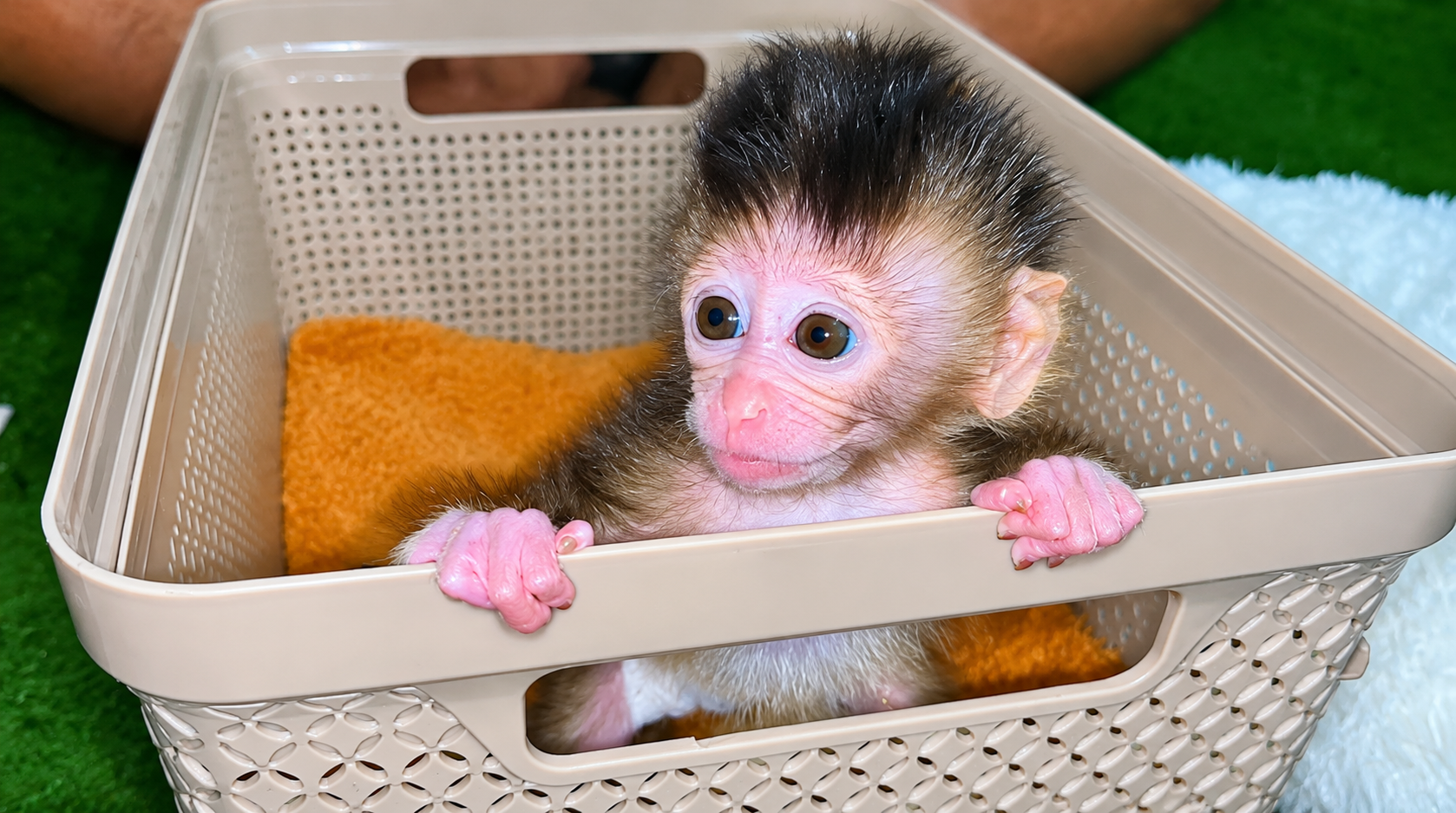
There are several possible reasons why a newborn baby monkey may cough, gag, or appear to choke while drinking milk. One common cause is feeding too quickly. When milk flows too fast from a bottle or feeding syringe, the baby may struggle to swallow and breathe comfortably at the same time. Because newborn monkeys have very small mouths and developing swallowing abilities, even a little difficulty during feeding can become dangerous.
Another possible cause is an incorrect feeding position. If a baby monkey is fed while lying on its back, milk may enter the airway instead of traveling safely into the stomach. This can cause coughing, choking, and breathing difficulties. Caregivers must be especially careful about positioning and should follow guidance from an experienced veterinarian or qualified primate specialist.
Sometimes, choking-like symptoms may also be related to swallowing difficulties, weakness, respiratory infections, or abnormalities involving the mouth, throat, or esophagus. In some cases, milk can enter the lungs, causing a serious condition called aspiration pneumonia. Warning signs may include coughing, unusual breathing sounds, nasal discharge, difficulty breathing, or refusing to drink.
For little Monkey Pipi, every feeding moment deserves patience and careful observation. Caregivers should never force milk into a newborn monkey’s mouth or squeeze a bottle too quickly. Feeding equipment and techniques should be appropriate for the baby’s size and medical needs.
If a newborn monkey repeatedly coughs or chokes during feeding, it should be examined promptly by a veterinarian experienced in primates. If breathing becomes difficult, milk comes from the nose, or the baby becomes weak or unresponsive, emergency veterinary care is necessary. Do not continue feeding while the baby is struggling to breathe.
Raising a newborn baby monkey is not always easy. Every little movement, sound, and feeding reaction can provide important clues about its health. Understanding the possible causes of choking helps caregivers recognize danger early and seek the right treatment.
Little Pipi deserves gentle care, safe feeding, and lots of love. ❤️🐒
Remember: A newborn monkey choking during feeding is not something to ignore. Proper veterinary guidance can make a life-saving difference in protecting these precious little babies. 💗